
TECHNOPAST FRANCE
30110 Branoux


How to make pasta?
Which Cereals? Kneading - Extrusion or Rolling? Drying - Packaging - Conservation.

01- How to make pasta with a press or a sheeter
Pasta is made from durum wheat semolina, to which a percentage of liquid must be added, between 30 and 33% of the volume of the semolina.
In its 'dry' state, the semolina contains a residual moisture...
En savoir plus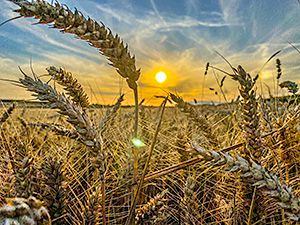
02- Which wheat to produce pasta with a press or a sheeter?
There are many varieties of wheat and their particularities can be appreciated in the pasta, in terms of flavour, colour and texture.
Two main species:However, all varieties are represented by two ma...
En savoir plus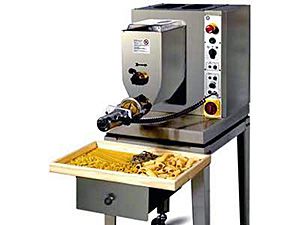
03- Are all varieties of wheat compatible with pasta production?
- The equipment for the production of pasta, by extrusion or rolling, is compatible with all varieties of common or durum wheat, provided that the flour or semolina used meets the minimum and maximum ...
En savoir plus
04- What additives are needed to make extruded or rolled pasta?
The percentage of liquid added to the semolina/flour may consist of water only or may also contain eggs and other additives, intended to give colour and flavour.
1) The contribution of eggs in the ma...
En savoir plus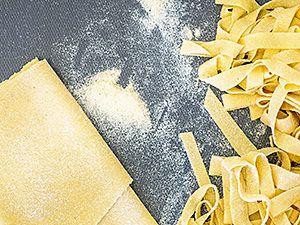
05- Water quality in pulp production
This is a very important factor and, above all, it must not be excessively hard, i.e. loaded with ions, calcium and magnesium (known as calcareous water).
There are other elements in the water that c...
En savoir plus
06- Kneading: an essential stage in dough production
This is the first phase of the production process. The final result will depend in part on the quality of this operation, which consists of obtaining a perfectly homogeneous mixture by mixing the 'sol...
En savoir plus
07- The different pulp production technologies
1) Pasta production by extrusion (extruders or presses)This process uses an Archimedes screw, commonly known as an "endless screw", which exerts a thrust inside the extrusion neck to make the mixture ...
En savoir plus
08- Fast consumption of fresh pasta and ravioli
Keep for 3-4 days in the refrigerator at 4°C.After production, extruded or rolled pasta and ravioli can be consumed immediately.
The only thing to do is to cook them in boiling water. Obviously, this...
En savoir plus
09- Pasta drying: with static dryers or with a drying tunnel
In the case of small and medium-sized pasta production units, the static dryer is the most suitable, up to a production capacity of 500 kg. These are semi-automatic lines, with a greater or lesser deg...
En savoir plus
10- Pasteurisation of fresh pasta and ravioli: the different steps
PasteuriserFor the pasteurisation of the products in the core. This involves exposing the products to a heat treatment for a period of time determined by their thickness or the type of filling (in the...
En savoir plus